

I had to go north - very north - to find myself
How the Arctic became Julia Bayly's 'happy place'

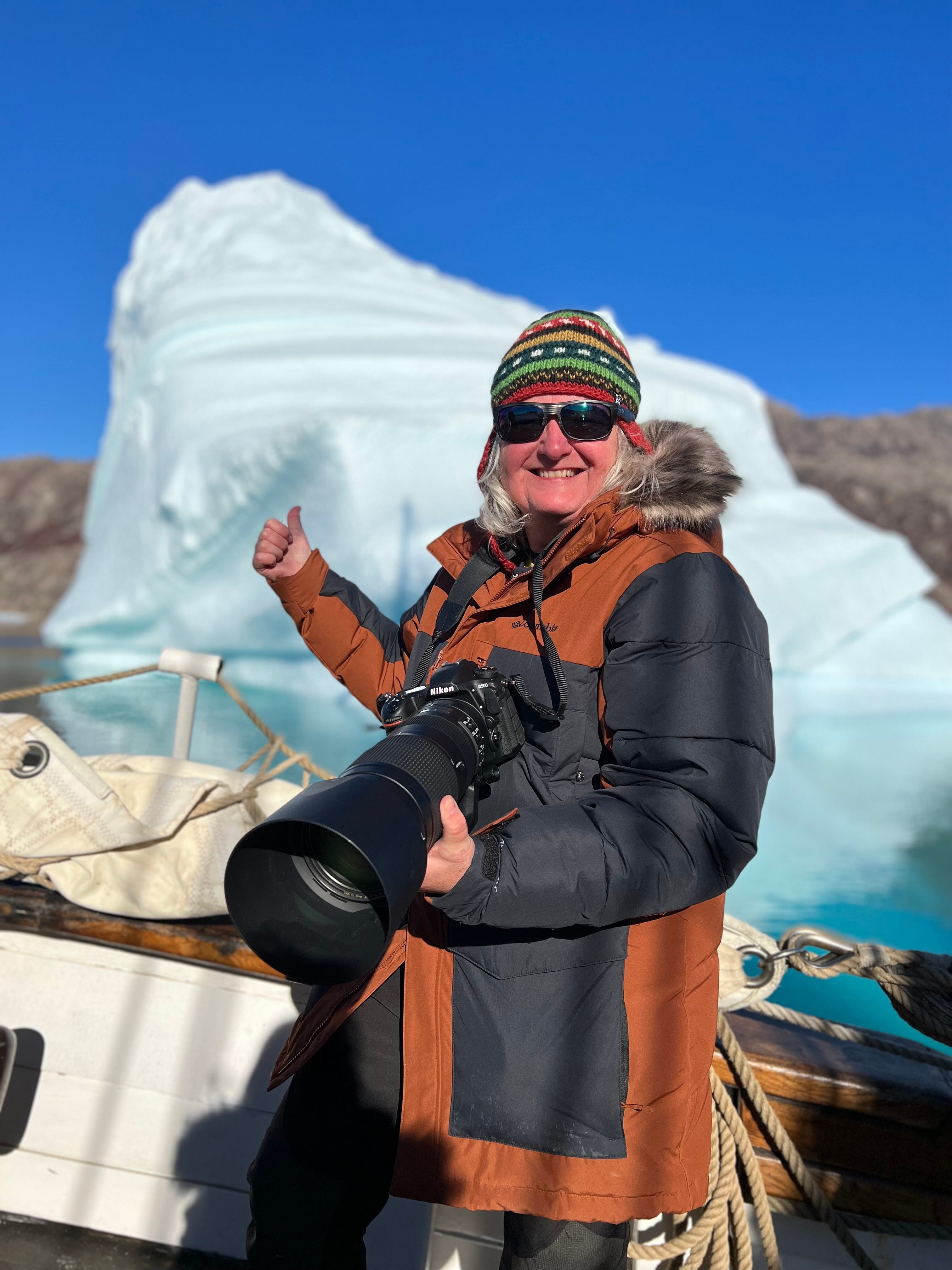
Editor’s note: This month’s guest post comes from Julia Bayly, a writer and journalist, world traveler, researcher, bon vivant and my former colleague at the Bangor Daily News, where she wrote about the St. John Valley and Maine farms and creatures for decades. She’s an amazing woman. I want to be her when I grow up.
The first time I crossed the Arctic Circle was in Finland. It was in 2017 and my best friend and I were heading to an academic conference hosted by the University of Lapland. Virtually every other attendee not from Lapland had flown from Helsinki in the south. I managed to convince my friend it would be a far grander adventure to drive it instead.
And oh, how it was.
Two days and close to 700 miles to the far north, over the Arctic Circle on a road trip many Finns we met have never considered doing. But I was hooked, then and now - to the point now that if too many months pass below 76.29 degrees North, I start to feel restless. Then I start looking at flights.
Since that trip in 2017, I’ve traveled to the Arctic region and above the Arctic Circle multiple times -mostly in Scandinavia and Greenland by air, sailing ship and auto.
Inevitably, I’m asked why I’ll pack up and spend money to travel to places colder, darker and more remote than Maine, especially in the middle of a Maine winter. My stock answer is, “Because the Arctic is my happy place.”
When I ask myself that question, however, the answer is much deeper and more profound.
For one thing, for as long as I can remember I have always wanted to know what is around the bend in the road, the other side of those mountains or over the horizon. Growing up in the Pacific Northwest, I remember trips to the coast where I’d just sit and stare over the Pacific Ocean until it felt as if I could see those living thousands of miles to the west.
But it was the north that really called to me. Not just geographically. It’s more the idea of “north” and all the possibilities it contains.
It was that geographic curiosity that spurred my decision to attend college at the University of Maine at Fort Kent. While not that much farther north than my Oregon hometown, at least “north” was in the title, so to speak.
From Fort Kent, I remember driving north to the St. Lawrence Seaway and staring at the mountains on the far shore, itching to know what was beyond them.
It was about that time that my Aunt Diana presented me with a box of things that had belonged to my great uncle George Simpson McTavish, a trader and trapper with the Hudson Bay Company in far northern Canada in the late 1800s. His father, my great-great grandfather George McTavish had also worked for the HBC in the early to mid 1800s.
Among the items were hundreds of black and white photographs taken in northern Canada by the younger McTavish. Photographs of Indigenous people building igloos or with crafted canoes, of trappers with sled dogs, HBC posts and ships. They all stirred something in my soul. Clearly, I shared this love of exploration into wild and rugged terrain.


Now, make no mistake. While I love seeing how far north I can reach, I in no way do so in ways that cause undue hardship.
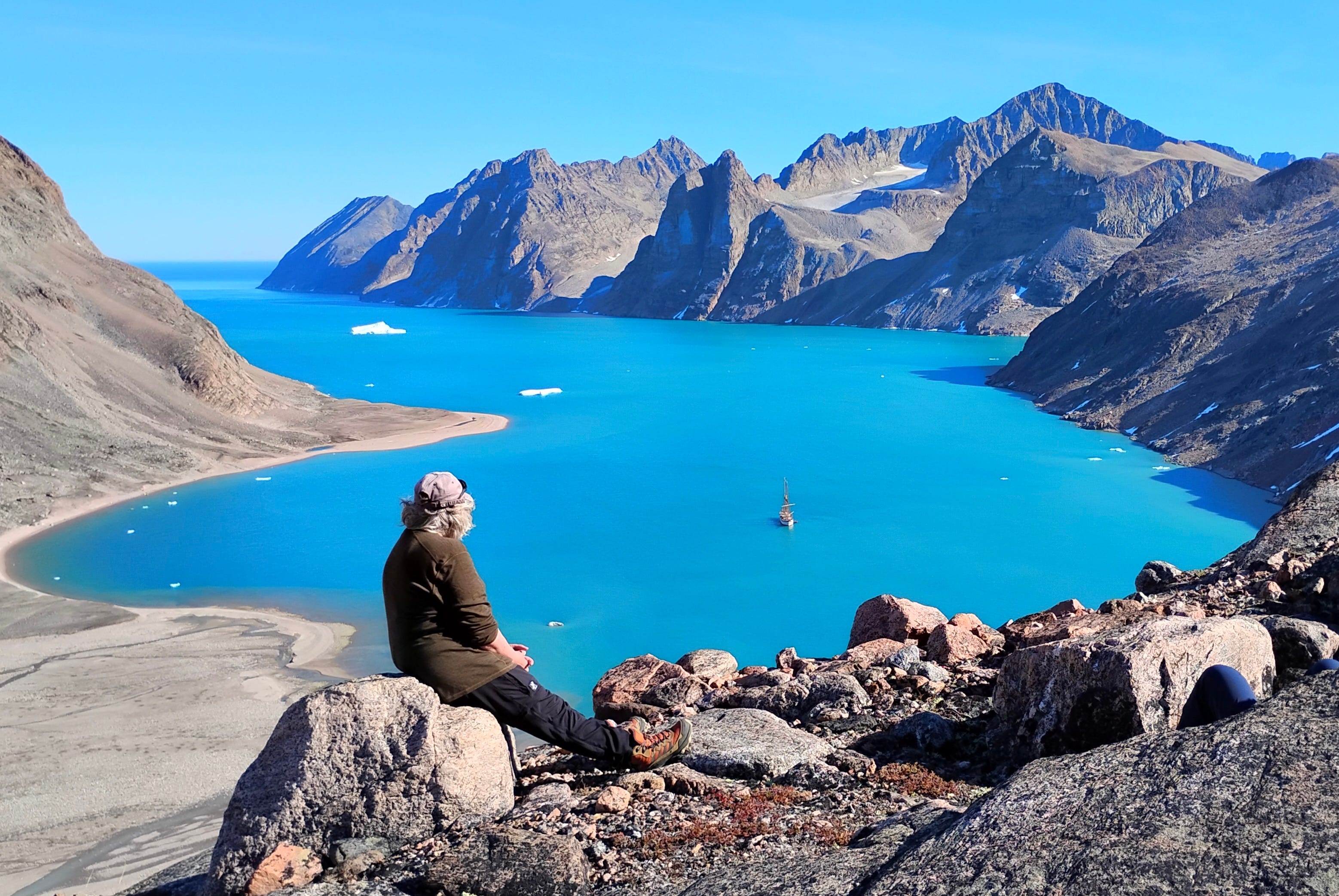
Times spent on sailing vessels exploring Greenland fjords or crossing open ocean have been relaxed and restful. Likewise, an expedition around Svalbard just 500 miles from the North Pole was a languid affair, if a bit rough in high winds and seas. I was never in any danger of scurvy, and the only time I touched a sail or rope was to get my balance.
Each time, I could hear the voices of the north speaking to me, to my very soul. When I am within their earshot, I feel I am the best version of myself. Totally at peace, dialed into my surroundings and more comfortable in my own skin than anywhere else on earth.
In the far north I can sit for hours in one spot contemplating a passing iceberg or marveling at a glacier seemingly near enough to touch. The cold does not bother me, nor do the lashing winds or stinging saltspray coming from a schooner’s bow.
The air is so pure and clean with more sounds of nature than those that are manmade.
With every trip into the north I see and experience something new.
And here’s the thing. No matter how far north I make it – so far, 80.32 North is my record – there is always more to discover. Not just what’s hiding behind glacier-covered mountains or stark white ice caps.
During every trip I discover something inside me. Something hidden behind years of workaday life or buried under childhood traumas. Each of those discoveries has made me a happier and better person.
The Arctic will test you in ways you can’t anticipate. Some of those tests are obvious, like hiking up a rocky mountain in Greenland without twisting an ankle or falling. Others are more subtle. Like spending time with small groups of strangers who become friends and realizing I am worthy – I am enough – in ways I had never thought.
I wonder, as I explore in the company of icebergs, glaciers, polar bears, whales, reindeer, muskox and walruses what my Hudson Bay Company long past relatives felt the first time they encountered the Arctic and north.
In what ways did it speak to them? Despite the hardships they faced, did it also offer a measure of peace and sense of belonging?
I’ll obviously never know. But like them, I’ll continue to venture to The Arctic and let it shape me one step farther north at a time.
 | A guest post by
|