


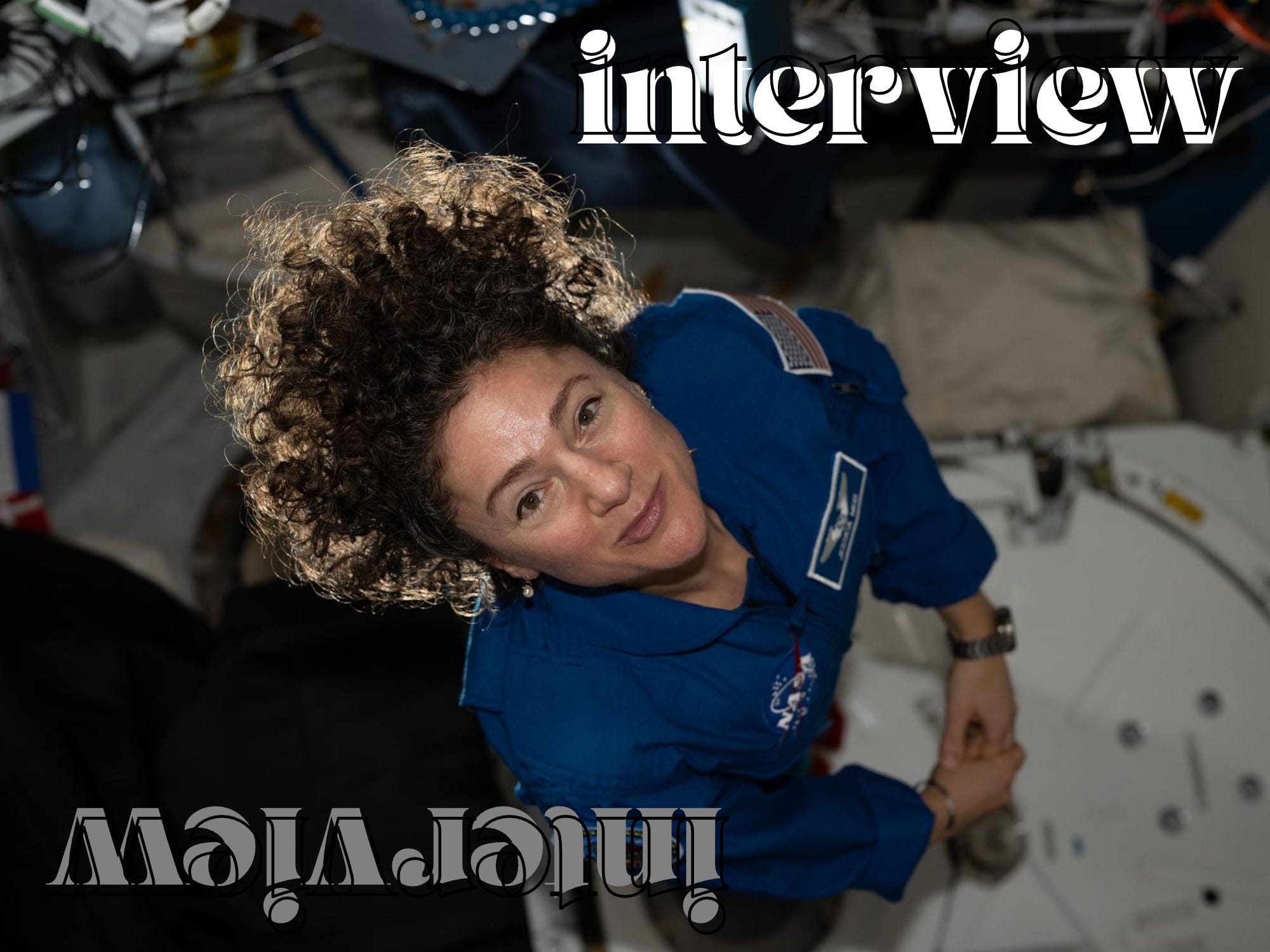
Depending on how you measure it, between 630 and 780 human beings have been to space. It’s a tiny number - less than .000008 percent of the entire world population.
That it’s among the most elite of clubs makes it all the more incredible that two of those people are from Maine - Chris Cassidy of York, who took his last spaceflight in 2020, and Jessica Meir, a Caribou native, who returned from her second mission aboard the International Space Station on Oct. 8, where she served as mission commander.
Meir grew up in the rolling fields of Aroostook County, under the endless, clear night skies of northern Maine. She’s a marine biologist, a world-class scuba diver, an expert on the physiology of animals (including humans) in extreme environments, a pilot, a mom and, of course, a NASA astronaut. She participated in the first all-woman spacewalk, she spent five days living underwater, and she’s a mom. In other words: she’s a total badass.
Next month, Maine’s own Islandport Press will publish “The Cosmic Journey of Jessica Meir,” a book for young readers written and illustrated by Peaks Island-based Jamie Hogan, telling Meir’s story from the farmlands of The County to the vastness of space. Whether it’s young people transfixed by the story of a real-life astronaut or grownups in awe of her accomplishments, Meir’s journey is one for the history books. I spoke with Meir in early November, just one month after she returned to her home planet after nearly eight months in space.
You’ve talked a lot about the clear night skies of your childhood in Aroostook County that were formative to your eventual career as an astronaut. What do you recall about your stargazing as a child? Is there a particular feature of the night sky that you are a fan of, then or now?
I think the one thing that sort of resonates and brings back those memories is really just the Milky Way. In most places in the US that are highly populated, you really don’t see a very dense segment of the Milky Way because there’s so much light pollution around. But in northern Maine we did have that, and I think I didn’t appreciate it as much as I should have at the time because that was just how I grew up. It was always there, and I think I only kind of found out later as I moved around and got older that we were so fortunate to have that incredibly clear night sky and be able to see those types of celestial phenomena.
Did you ever see the aurora as a kid? We just came off a pretty amazing year or two where people all over Maine got to see incredibly intense northern lights multiple times. I don’t remember that ever happening as a kid, so it was pretty thrilling.
Sometimes my husband makes fun of me for saying it because it sounds so pretentious, but I’ve never seen the aurora from Earth. I’ve only seen it from space. I was asking my mom about this - like, surely we must have been able to see it at some point in my first 18 years of life. I just don’t remember ever seeing it, either.
I saw the aurora on my first space mission, but they weren’t very intense. Now, we’re actually just coming off of this solar maximum and the solar cycle, and so that’s why on this mission on the ISS, they were incredibly intense. We were so fortunate to see the most extraordinary displays. There were these green snakes dancing right beneath us, all over the Earth. And the intensity of the colors as well, the color spectrum - I didn’t even know that you could see such vibrant purples. It was really extraordinary.
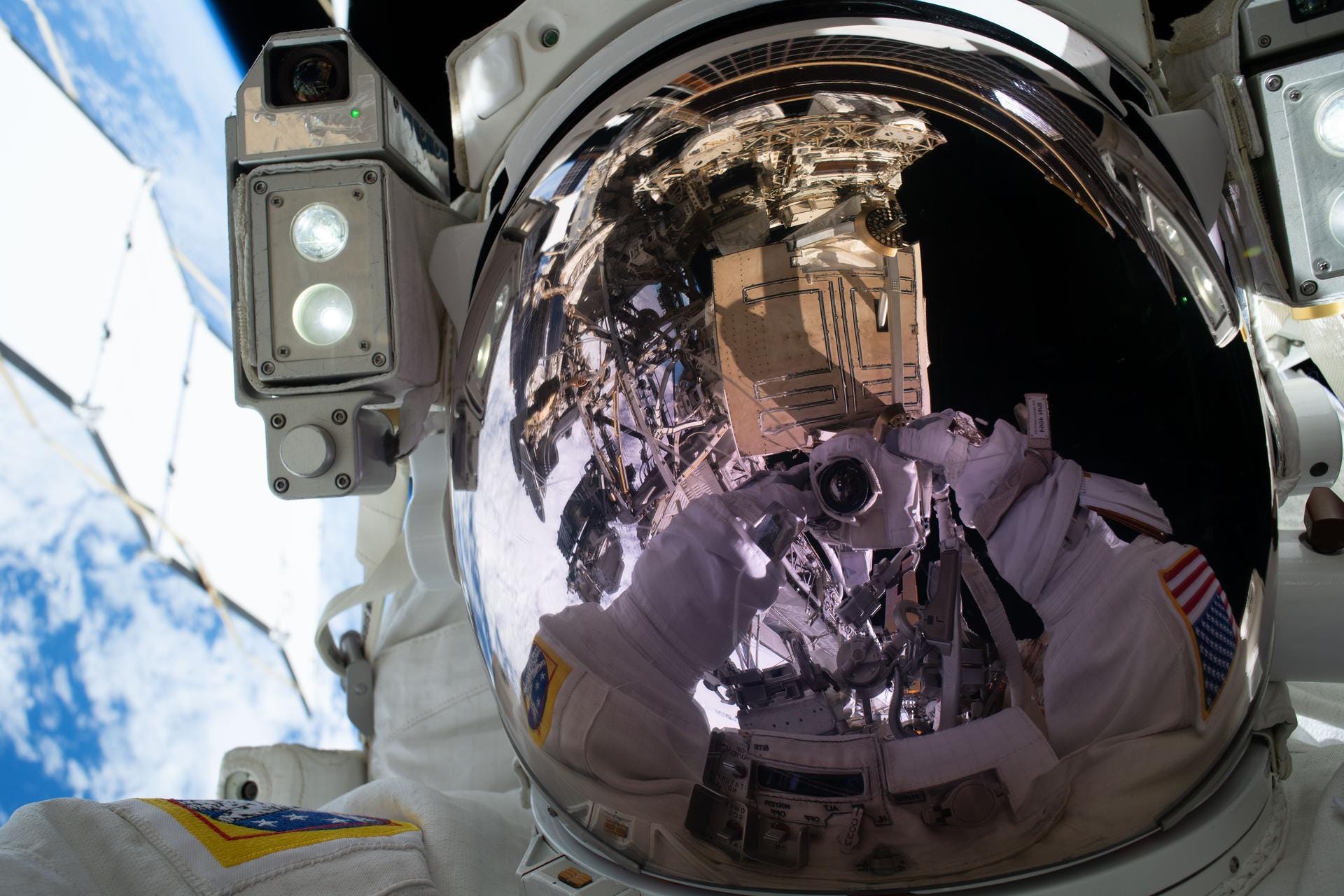
Before you went to space, you went to Antarctica, you spent time in a cave in Sardinia, and you spent five days underwater in an undersea research base in Florida. How do you compare and contrast those four extreme experiences, both physically and mentally?
I think they all sort of follow this common theme of what really has invigorated me throughout my life, and that they’re extreme environments. They all share that, but in very different ways. They often involve a harsh climate. You probably need to use technical equipment there, like if you’re trying to rappel or ascend up and down in a cave. If you’re diving in the Antarctic, you’re relying on a dry suit and your scuba gear. We are relying on our technical equipment all the time on the International Space Station, of course.
What I’ve found in my life is that the times that I am the most content are when I’m immersed in some kind of activity that has both that mental and that physical challenge. I think also academically, I find these extreme environments really the most interesting because that was how I got interested in animal physiology. I was looking at animals that really thrived in these types of extreme environments. Those are the ones that have the most impressive, the most unique, the most extreme physiological adaptations. So I think it kind of all fits in this theme of life at the extreme, and understanding more about it, and even trying to live it a bit myself. For me, it doesn’t get better than that. That’s when I really feel that I’m operating at my peak and living life to the fullest.
People may not know that your PhD is in marine biology. As someone who has spent a lot of time with marine birds and mammals, which species do you find the most fascinating, or which you’d want people to know more about?
One of the animals that actually I haven’t studied but that I am so impressed by are guillemots, or murres, as they’re often called. They’re birds. They kind of look a little bit reminiscent of a penguin or a puffin. They’re black and white. But they actually are not only really good divers, but they also can still fly exceptionally well. Penguins are the best divers, and emperor penguins are my favorite that I studied, but they can’t fly. So I really like the fact that guillemots retain that kind of capability to be able to dive really well, but are still able to fly.
Well, it’s kind of like you. You can dive and you can fly. Kindred spirits.
I’m not nearly that graceful, but thank you.
What was it like to be on the ISS when the Artemis II mission took place? I know you and your crew got to speak with them briefly on their way back to Earth.
It was very unique to have that ship to ship call. We were so excited to talk to our friends, but we thought, well, this is going to be broadcast to the world, so it’s probably going to be a little bit awkward. We want to catch up with our buddies, but we’re doing it on national television! Right before we started the connection, we didn’t realize we were going to have video, so we were able to pull up one of our laptops and actually have a video of them in their capsule. They couldn’t see us, but we could see them. The moment I saw the image of my four friends in their capsule - you know, Victor and Christina are both my classmates, Reid was our chief, and he was in the class just before mine with Jeremy. They’re kind of like our astronaut uncles. We’re all really close.
Just seeing them, and knowing what they had just accomplished, and the fact that we were both in space having this call, it was really… I was actually highly emotional. It was difficult for me to find my words at first, which isn’t something that I struggle with. It was really special for us to have that connection, and it was fine that we were sharing it with the rest of the world. It was a really big moment for humanity, so I’m glad that we were able to share it with everybody.
What’s your involvement with the future Artemis missions?
Even before my last ISS mission, I was supporting the human landing system program. SpaceX is building one of the landers that will land our astronauts on the moon, and I was kind of a liaison between the astronaut office and that program. I’ve been involved in lots of ground tests along the way, like testing out the xEMU, the exploration EMU [Extravehicular Mobility Unit] that was kind of the reference suit before Axiom started building the new suits that we will use on the moon. So I’ve definitely been involved in parts of it even before this mission.
We’ve been back just a little bit over a month now, and we’re in this post-flight period where we’re finishing our baseline data collection. I actually just got out of an MRI looking at the cartilage in my knee. So we’re still very actively doing all of these scientific experiments, medical tests, and also our debriefs. That will finish up soon, and then we’ll have some time off to go around and do some public outreach to give back to all the people that gave so much to us. After that, I’m not sure yet. We’ll be back in the office around April.
As to whether or not my role will be with the Artemis program, I’m sure there’ll be at least something that I’m doing involved in Artemis, because it’s really all hands on deck right now. We’re starting this new astronaut selection, so please get your applications in by December 3, anyone that’s interested. We’re going to be very busy in the spring getting this new class online and getting ready for these next Artemis missions. I’m sure I’ll be involved in some way, whether that’s on a crew - of course I would love that - but that’s not yet for me to determine.
That’s amazing. I’ll be sure to get cracking on my astronaut application! OK, so, I’m gonna ask you a couple of really rapid fire, very Maine-centric questions. Off the top of your head: aside from home, where is your favorite place to visit in Maine?
I think right now I would say the coast of Maine. I grew up in Caribou and a big piece of my heart is still there, but now my mom lives near Portland. And so I love going back there and taking the little ferry out to some of the islands and having a picnic and riding my bike around. That’s kind of the iconic little perfect weekend for me.
Favorite food from Maine? It could be something super specific made by your family, or it could be something else.
I’m sure this is the most cliched answer imaginable, but I mean, it has to be lobster, right? It’s hard to compete with that. You know, I feel like nobody understands me when I talk about a Slush Puppy. Is that only a Maine thing?
I’m actually not entirely sure! Maybe it’s a New England thing? Regardless, it’s very specific to here. When’s the next time you plan on being back in Maine?
One of the things we’re doing this week is working out my post-flight schedule, and usually we do try to go to our hometown. I would love to go up to Caribou and be able to give a talk to the school system and to the general public around. I am definitely hoping to get up to Maine in the next few months. I love it there.