
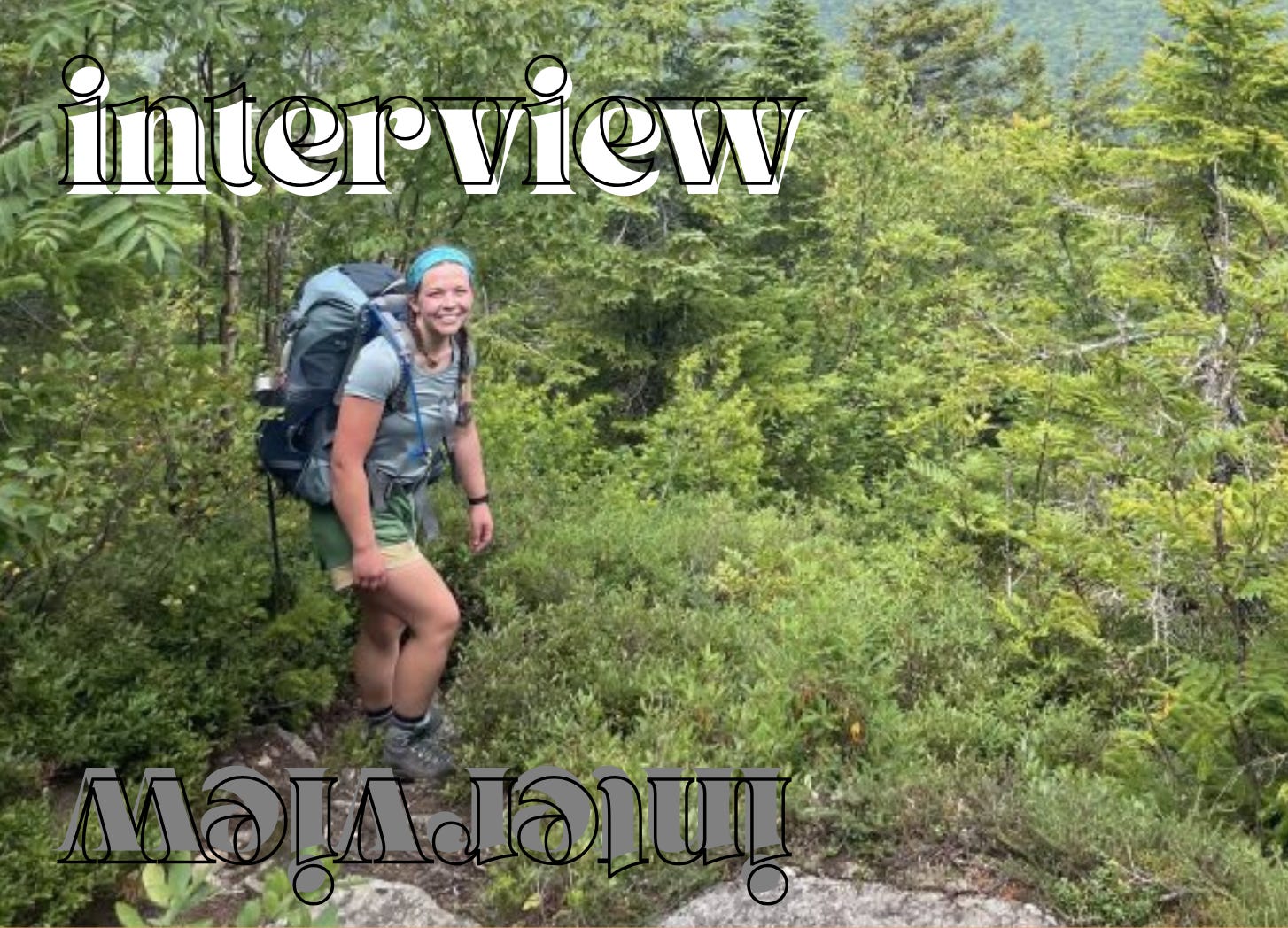
INTERVIEW | Julia Hiltonsmith: The island that fights back
Sears Island as a case study for Maine's fraught relationship with development
For decades, people have wanted to build something big and industrial on Sears Island - a.k.a. wahsumkik in the Penobscot language - in my hometown of Searsport. Gov. Angus King wanted to build a container port there. Gov. John Baldacci proposed a liquid natural gas terminal on the island. Most recently, Gov. Janet Mills announced plans to build an offshore wind power port - but talks began well over 50 years ago, in the 1960s, when an aluminum smelter was proposed for the island, followed by ideas for a desulphurization plant, a nuclear power plant and a coal power plant.
Every ambitious plan for Sears Island has failed. The last time anything was built on it was in 1906, when a short-lived seaside resort was constructed; it was out of business by the 1920s. The only human development that can be seen there today are the foundations of a few 19th century farmhouses, and the causeway connecting the island to the mainland, built in 1988 in anticipation of what many assumed were the inevitable developments to come. It’s been nearly 40 years since that causeway was built, but despite developers’ best efforts, anything being built on Sears Island anytime soon seems quite unlikely.
Why has every plan for Sears Island failed? I have my theories, but I asked Julia Hiltonsmith, who is finishing up her PhD at the University of Maine in environmental policy and anthropology, for hers. Her dissertation is about the long history of development proposals on Sears Island, and the fascinating interplay between energy policy, marine resources, environmental concerns and community interests. In her research, she’s spent hours interviewing everyone from local residents and fishermen to policymakers and scientists, trying to piece together the complicated narrative of nearly 60 years of planning and pushback.
Before we dig into the topic of Sears Island, what brought you to Maine from your home state of Tennessee? Memphis, where you grew up, is a pretty wildly different place from rural Maine.
My love for Maine was kind of inherited from my grandparents and my paternal side of the family. In 1971 my grandparents bought a little piece of property in Penobscot, and they came up from their home in New York to repair this really old house. It was their life dream to retire there, but unfortunately, that didn’t happen, and the house kind of fell back into disrepair. The local fire department actually ended up burning it down! And then my dad decided he was going to develop the land himself, but then he died in 2014, when I was 17. That was obviously a pivotal life moment for me. And so I think I’ve always had this thing in my mind that Maine was where we were supposed to be, and I’m kind of fulfilling my family’s dream of being here. I’ve put down roots. This is where I want to be. The University of Maine was my top choice.
I’m from Searsport, and I grew up going to Sears Island. I definitely took it for granted back then, and I definitely didn’t really understand at the time what was at stake with all the development talks over the years. It’s obviously a special place. What drew you to it as the central focus of your research?
So, my background as a graduate student is in offshore wind development. One of my co-chairs invited me to join a project funded by Maine’s Department of Marine Resources that talks to fishermen who have historically fished in the area in the Gulf of Maine that’s being cited for Maine’s offshore wind research survey. The idea is to document not just how the ecology in that region has shifted over time, but also to document their stories, and their relationship to the place. That last piece - relationship to place - is so interesting to me. It often kind of gets subsumed under the whole NIMBY idea, but I think in this case that diminishes people’s relationship to the natural environment.
When I pitched my PhD project, it was about offshore wind development with a focus on storytelling and language. As we narrowed the focus, I really honed in on Sears Island, which I admittedly knew very little about at that point. It quickly became clear that Sears Island was such a perfect example of the larger concept of economic development versus conservation - not just in terms of offshore wind, but with all the different proposed developments there over the years. It’s kind of the ideal case study. It just opened up a whole wealth of ideas and arguments and narratives around our relationship to place, and our economy and so on. The arguments people made decades ago are strikingly similar to the ones people make today about offshore wind. Why is that? Why do we keep circling back and doing the same thing over and over again? I think it’s fascinating.


Besides the obvious - largest undeveloped island on the Maine coast, access to deepwater harbor - what is it about this place in particular that’s proved so endlessly desirable for developers, and so precious to protect for environmentalists and communities?
Well, for the folks that love the island and venture out there almost daily, I would say that it’s a place of healing - even if it’s sited in between two different industrial developments, with GAC Chemical on one side and Sprague Energy on the other. Regardless, I think people feel really deeply connected to it, and have spent all these years protecting it. It’s this publicly accessible swath of nature. It’s really special to people. I think given that there are other parts of Maine, like in the greater Portland area, where so many fields and farmlands have been developed and diminished over time and access to beaches and the shoreline start to get restricted, that makes places like Sears Island even more important. Those kinds of open, accessible natural spaces are pretty integral to Maine’s identity. Sears Island has defied that kind of encroachment for so long. It’s almost like it’s this autonomous entity that has its own identity. Someone in one of my interviews described it as the island that fights back.
And yet, every decade or so, some governor or entity decides that they’ve got the right idea for Sears Island, and they’re finally going to be the ones to build something there. It kind of feels like a white whale, or a big political prize to win.
Why is the state so keen on developing it, given the fact that they have failed every time? I don’t have a surefire answer, but I can tell you my gut reaction, which is that Waldo County has historically been a very rural and impoverished county in Maine. There was a huge economic decline in the middle of the 20th century, and when you desperately need some kind of economic boost, and you have this piece of land you can use… it makes sense you can justify that kind of development. Now that the state has tried time and time again to develop it, it starts to feel like a passed-on project for each governor. Who will win that prize? Who’s going to succeed in developing Sears Island? If I were governor - which I would never want to be! - I would steer so far away from that topic. It’s so contentious. It invites so much criticism.
There are countless other examples of projects that have flopped because of local or statewide opposition - from the fish farm in Belfast, to tidal power in Passamaquoddy Bay, to ski mountains in western Maine and housing developments on Moosehead Lake. We also saw big opposition to CMP’s power corridor, and very recently to data centers, even if those developments did manage to get pushed through in one way or another. What is it about Mainers that not only drive us to oppose such things - but to be so successful at getting them canceled?
I’ve heard a few times in the interviews I’ve done that maybe, at one point, in perhaps the 1970s and before, Mainers were more open to inviting industry into their towns because of the economic hardship they faced. But I think that as time has gone on, and Maine has grown and people have started to look at the sacrifices that we’ve made in terms of our environmental integrity and our natural resources, they may not see these sorts of things as such a good deal after all.
Maine has definitely been burned by big business. Look at all the towns hollowed out by mill closures, and the environmental devastation that’s been wrought, between river pollution and PFAS and so on. I’m not surprised that lots of Mainers wouldn’t trust someone, whether it’s a politician or a corporation, trying to sell them on something like that.
And yet, I don’t think there’s any true consensus on it. It’s not like everyone is united against these sorts of things. Even in Searsport and the surrounding towns, not everyone is opposed to developing Sears Island. I’m also really fascinated by the kind of strange political alliances that have arisen over the years. I certainly don’t want to wade into it too much because it’s a very touchy subject, but it’s been so interesting to see how organizations that were formerly deeply opposed to development have changed their minds, and similarly how people that would be all about such development have changed their minds too. I guess it depends on which way the political winds are blowing, and who’s in office at a given time. At the end of the day, I guess the core arguments remain the same. It’s just which people are making them.
I wonder if anything will ever be built on Sears Island? Or, for that matter, if it could even be turned into something like a state park or a nature preserve, or some other lower impact development.
If I were to look at the track record of the past 50 or so years, I’m not sure I’d place any bets on anything.


