


If you attended elementary or middle school in Maine, there is an almost 100 percent chance you have been to the Maine State Museum in Augusta. A visit with your classmates to see how an old-fashioned saw mill works and marvel at a taxidermied moose has been a near-mandatory part of the educational experience in Maine since schools first began loading kids on school buses for field trips.
Until 2020, that is. That year, along with the rest of the world, the Maine State Museum closed during the pandemic. When most state facilities had reopened by early 2021, however, the museum hadn’t yet opened its doors - and it wouldn’t for years more to come. The museum, along with the Maine State Library and State Archives, all of which are housed in the cultural building at the state capitol, have all been closed to the public now for more than six years.
Later this month, however, some of that wait will finally be over. On Oct. 24, two out of the four floors of the Maine State Museum will reopen after $3 million in renovations from both public funds and private donations, including the addition of a dedicated educational center, a long overdue upgrade of climate control and other mechanical systems, and a modern reimagining of most of the museum’s look, feel and content. The lower two museum floors, which house the “Made in Maine” and “12,000 Years in Maine” exhibits, as well as the state archives and library, will reopen in a second phase in 2027.
Though the content of the museum was always updated regularly, the building itself hadn’t undergone a major renovation since it first opened in 1971. When the HVAC system failed while the museum was closed for the pandemic, it was clear to museum director Bernard Fishman that there was no delaying those upgrades - and that if there was ever a time to redesign the look and feel of the exhibition halls, it was now.
“We hadn’t planned, per se, to undertake such a huge project,” said Fishman, who has been with the museum since 2012. “But when it became clear we were going to be closed for quite a long time, we had to strike while the iron was hot. It was very much a making lemonade out of lemons situation.”
The museum that people will walk into in 2026 looks very different from the one people visited in previous decades. Upon entering the museum, however, the most eye-catching addition has got to be the whale.
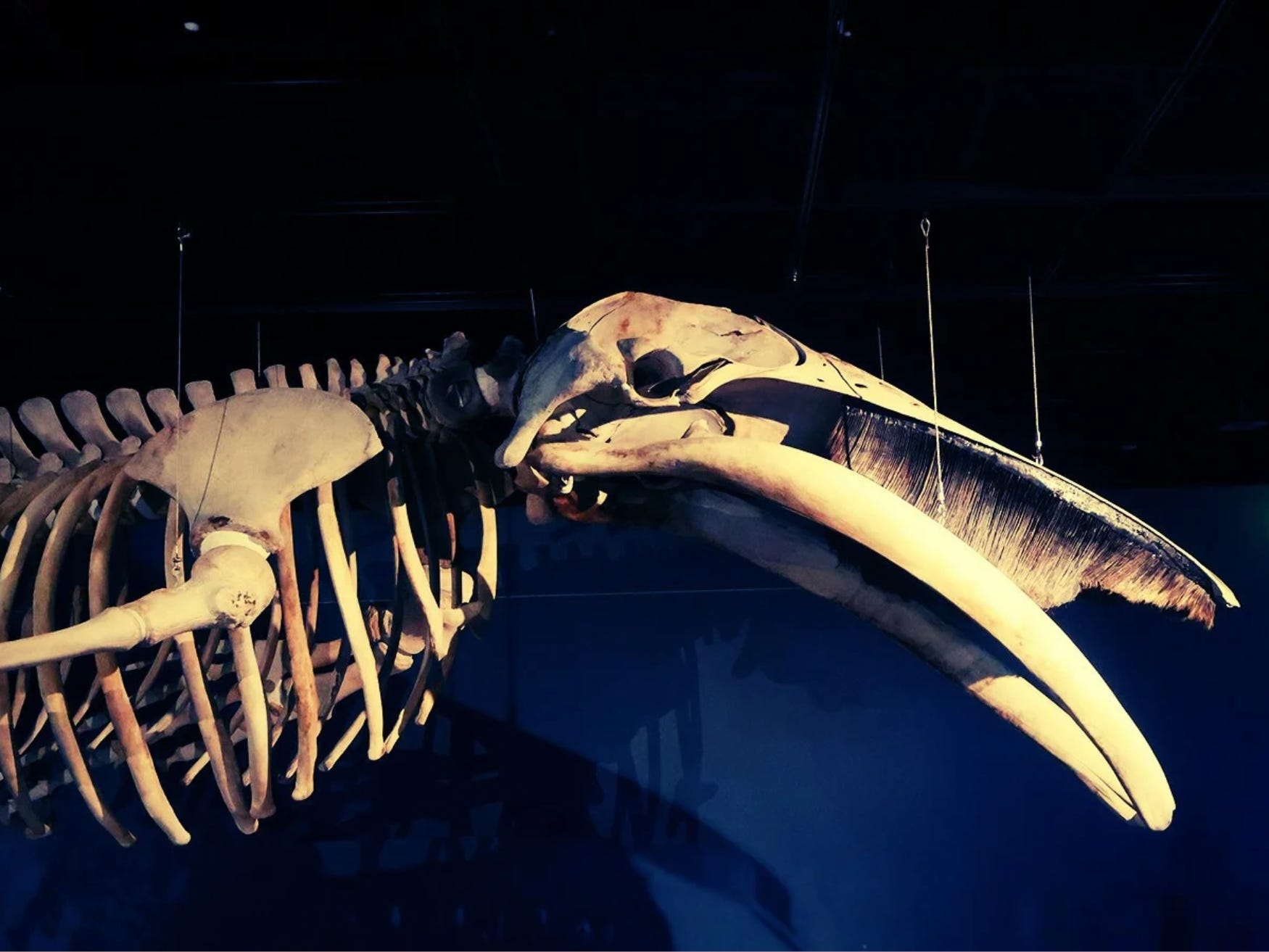
In the brand-new, 4,130 square foot gallery space on the main floor of the museum, visitors will be greeted by Vector, an authentic skeleton of a 45-foot-long adult female humpback whale. She’s accompanied by a humpback calf skeleton, hanging closely to her side as mother and baby whales do in the wild.
Vector was tracked in the Gulf of Maine and was studied by scientists for 35 years. Sadly, Vector died in 2019. Dan DenDanto, an Allied Whale scientist who since 1990 has cleaned, articulated and restored whale skeletons from Whales and Nails, his Bar Harbor based studio, began making calls to recovery agencies to see if he and the museum could acquire the whale’s remains. Once that happened, Vector spent several years in Bar Harbor, being carefully prepared so that her skeleton could be displayed at the museum without doing the thing that whale skeletons are known for - dripping small amounts of oil for potentially years, thanks to whales’ extensive blubber reserves.
“We are incredibly fortunate that it all worked out,” said Paula Work, curator of natural science at the museum. “In older museums with whale skeletons, it was very common for them to drip oil for years and years. Dan knows exactly how to prevent that from happening... He also calculated all the struts in the roof of the museum that needed to be engineered in order to support a 3,500 pound whale. It’s been a pretty amazing process.”
Also on display in the new natural history gallery are jawbones and flippers of an Atlantic right whale that died in 2016 off the coast of Boothbay Harbor, most likely due to chronic entanglement in commercial fishing rope. Visitors can compare some of the fascinating anatomical differences between right whales and humpback whales - as well as between whales and humans.
The other important addition to the museum is the new Lunder Education Center, the facility’s first-ever dedicated space for students to learn on site. It boasts a large classroom area and four brand new, hands-on exhibits on birds, marine archaeology, pine forest ecosystems and the history of the telephone, the latter of which features a telephone switchboard from the Bryant Pond Telephone Company - the last in America to use a hand-crank telephone system until it closed in 1983.


To get a sense of the pent-up demand: the museum isn’t even open yet, and the Lunder Center is already fully booked by school groups through January.
“This is an enormous advance for us,” Fishman said. “We’re finally able to utilize the latest technology, and to really have some hands-on programming for the thousands of kids that visit us every year. It’s a game changer for the museum.”
The first two years of the renovation project consisted in large part of moving thousands of objects out of the museum, putting them into storage and then documenting and cataloging everything - from what had been on display for years, to archived items that hadn’t been touched in decades. The museum’s total collection consists of approximately 800,000 objects.
“We’ve been doing this incredible deep dive into our collection, and have discovered things we didn’t even know we had,” said Angela Goebel-Bain, Curator of Decorative Arts and History. “We’ve been around since the 1830s. It’s a lot.”
In addition to old favorites on display like a massive Lombard Log-Hauler, an antique Ski-Doo snowmobile and one of the first-ever canvas canoes ever built in Maine (owned by legendary Maine guide Cornelia “Fly Rod” Crosby, no less), there are some gems that were hidden in the museum collection for decades. For example, staff discovered a strange-looking object that had previously been classified as a salesman’s sample for some sort of product used for mining or another industrial purpose. With fresh eyes, staff researched it and figured out that the object was a lady’s hand-held fan, constructed from slate quarried by Welsh immigrants in the town of Monson. The fan’s design can be traced directly back to finely carved fans made by slate miners back in Wales. It’s now on display in the museum.
“We looked at the census and saw that there was a whole population of Welsh immigrants who had come to Maine to work in the quarries,” Goebel-Bain said. “They brought their art with them. To me, that’s a beautiful embodiment of how culture travels across the ocean, and the immigrant experience. And to think it had sat in the archives for decades.”


Upstairs, the museum will reopen with the expansive, colorful new “Maine Quilts: 250 Years of Comfort and Community” exhibit. Quilted objects ranging from 18th century lady’s bonnets to handmade family quilts to those made by contemporary fiber artists show the cultural and artistic legacy of an art form dominated by the work of women. The longstanding “At Home in Maine” exhibit also reopens, updated and enhanced to show how real Maine homes have looked over the centuries.
Fishman said that the long closure afforded staff the rare opportunity to think big about how the museum approaches its primary purpose: to educate Mainers about the history, culture and landscape of their state. The result is a museum that feels much more personal and approachable, and brings the story of Maine alive in a fresh, inviting new way.
“The old museum was mainly about objects, and explaining what they are or what they did,” Fishman said. “Now, we try to tell the history through personal stories and experiences. We want to make it feel relevant. We want people to see things through the eyes of the people that were involved. We want it to be hands-on. What was it like? What did it mean to them? And what does it mean to us?”
Starting Oct. 24, the Maine State Museum will be open Tuesday-Sunday, 10 a.m.-4 p.m. Follow them on Instagram or Facebook to receive the latest updates on special events and phase two of reopening.